Biocracked
←

#fatty liver

1 article
Approach: macro science (with a conceptual split). Palette: D, bold color field.

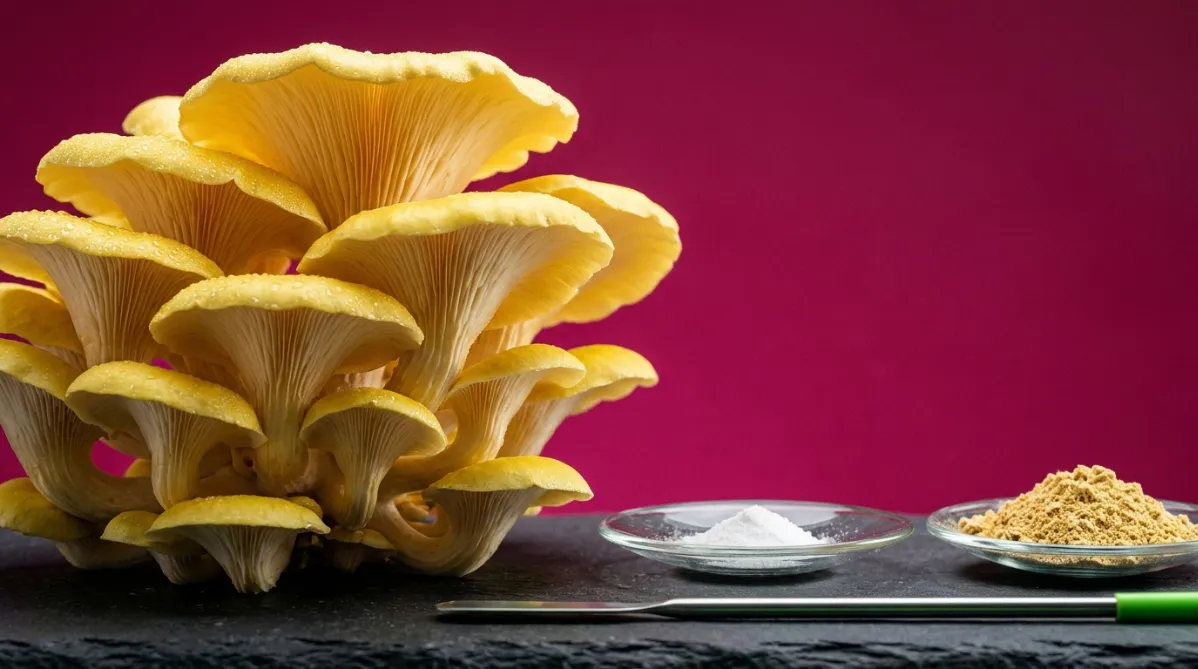
Extreme close-up photograph of a cluster of golden oyster mushrooms (Tamogitake), their ruffled, canary-yellow caps and fine gill structures sharply detailed, shot at a slight low three-quarter angle against a saturated magenta backdrop. In the foreground, a small glass watch dish holds a pinch of fine white crystalline powder, the isolated compound, sitting plain and inert beside a heap of fawn-yellow dried mushroom powder in a second dish. Soft directional studio light from the upper left gives the caps a translucent glow and creates crisp, short shadows. Tiny dew-like droplets cling to the gills. A single thin electric green stem of a lab spatula glints at the edge of the frame. Mood: curious, vivid, quietly skeptical, with the mushroom clearly outshining the isolate. No text or labels.
research

このキノコは齧歯類の肝脂肪を減少させたが、主成分だけでは効果が見られなかった

BY NOVA CHEN ·

エルゴチオネインはキノコの健康効果の中心成分とされてきましたが、最新の齧歯類実験でその評価が揺らいでいます。金糸キノコ(タモギタケ)粉末を与えたラットと肥満マウスは肝臓のコレステロールと中性脂肪が減少したものの、純粋なエルゴチオネインだけを与えても同様の効果は見られませんでした。キノコは糞中のコレステロールや遊離脂肪酸の排泄をやや増やす傾向がありましたが、エルゴチオネイン単体では観察されませんでした。著者らはこの効果をエルゴチオネインだけに帰すことはできないと結論付けています。齧歯類だけの研究であり、キノコが実験動物の食事の5%を占めるほど大量に投与されている点に留意してください。

This page is available in